Organic Chicken Bone Broth
Chicken Bone Broth is nutritious and tasty all by itself or a great start to soups or other dishes. Even better, it’s easy to make at home.
It has been many years since I made my first forays into organic eating. Back in the day, it was a philosophy that was more “fringe” than “in.” And in practice, it meant a heavy reliance on local farmers and home cooking to support your habit.
Happily things are easier today!
But there is still a lot of value in “do it yourself” methods—like making your own chicken bone broth. Benefits include supporting your local farmer, improving flavor and going soy/corn free–along with significant cost savings.
Any time I serve a roasted chicken (which is super easy using my Dutch Oven chicken recipe), I turn the scraps—bones, wing tips, and skin (from non-skin eaters like my husband) into broth. I’ve done it practically forever, originally making a basic stock and now making bone broth.
What is Bone Broth?
What is stock versus broth?
In terms of a formal definition, Food & Wine tells us that “the main difference between stock and broth starts with the primary ingredient. Stock is generally made from bones, and broth is generally made from flesh. In both cases, they are often supported with aromatic vegetables”.
But in common parlance the terms are used pretty much interchangeably.
What makes bone broth different?
Per Epicurious “Bone broth is a hybrid of broth and stock. … It is cooked for a long period of time—often more than 24 hours—and the goal is not only to extract the gelatin from the bones, but also to release the nutritious compounds and minerals”
There are many health claims made for bone broth from improving joint health to better sleep. In any case, it’s tasty and makes a great base for soup!
Why You’ll Love This!
Tasty. Have you ever picked up a packaged broth that tastes like water? Well you definitely won’t have that problem here!
Economical. Since this is made with chicken and (optionally) vegetable scraps that you were going to discard anyway, my chicken carcass bone broth is practically free!
Quality Controlled. Yes, there are a lot more available commercially broths now (I do keep TJ organic bone broth around for emergencies). But making your own means you can easily go organic, avoid allergens and even use chickens free of corn and soy.
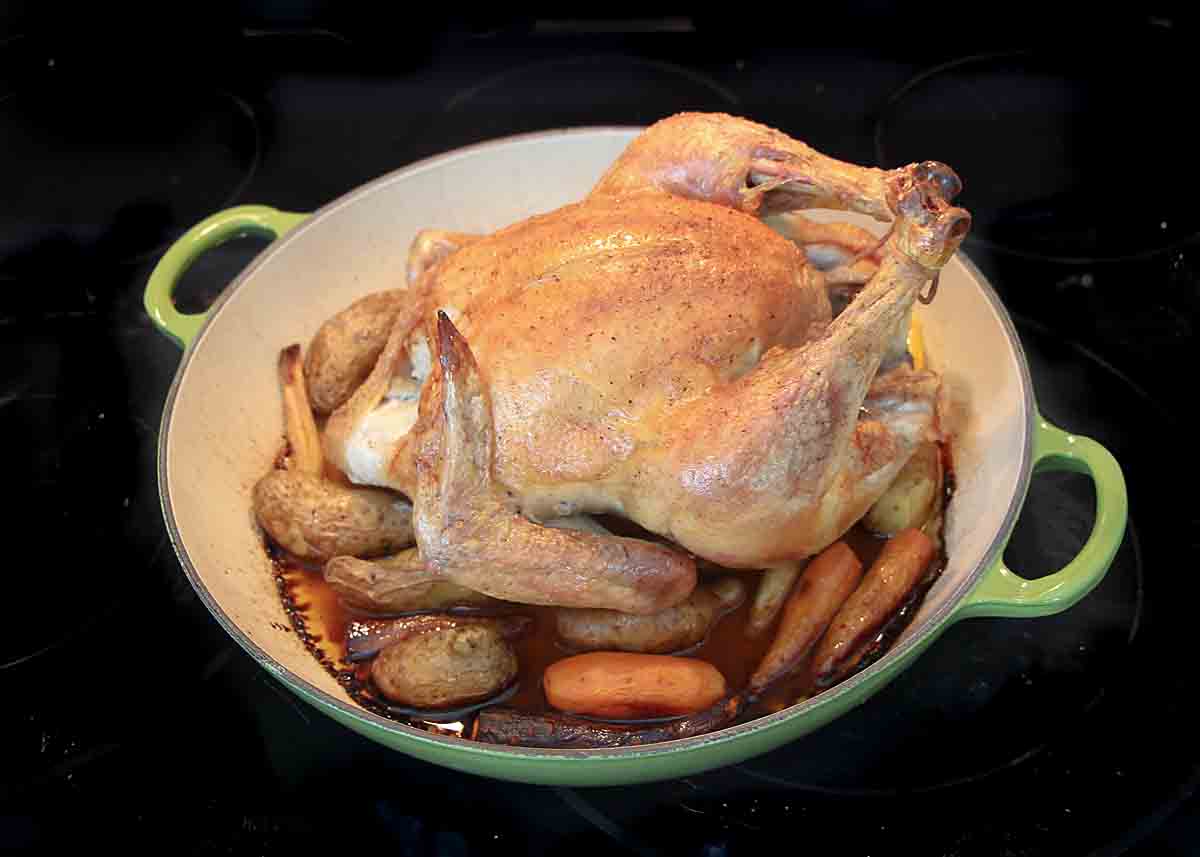
What You’ll Need
Ingredient Notes
- Scraps (Bones, skin, wing tips, deglazed pan juices, etc.) from a large roasted chicken. Provides the chicken flavor and nutrition. If you aren’t roasting a chicken you can use any chicken scraps, ideally roasted.
- Apple cider vinegar. Acidifies the water so that minerals are effectively extracted. Can sub wine or lemon or another mild vinegar
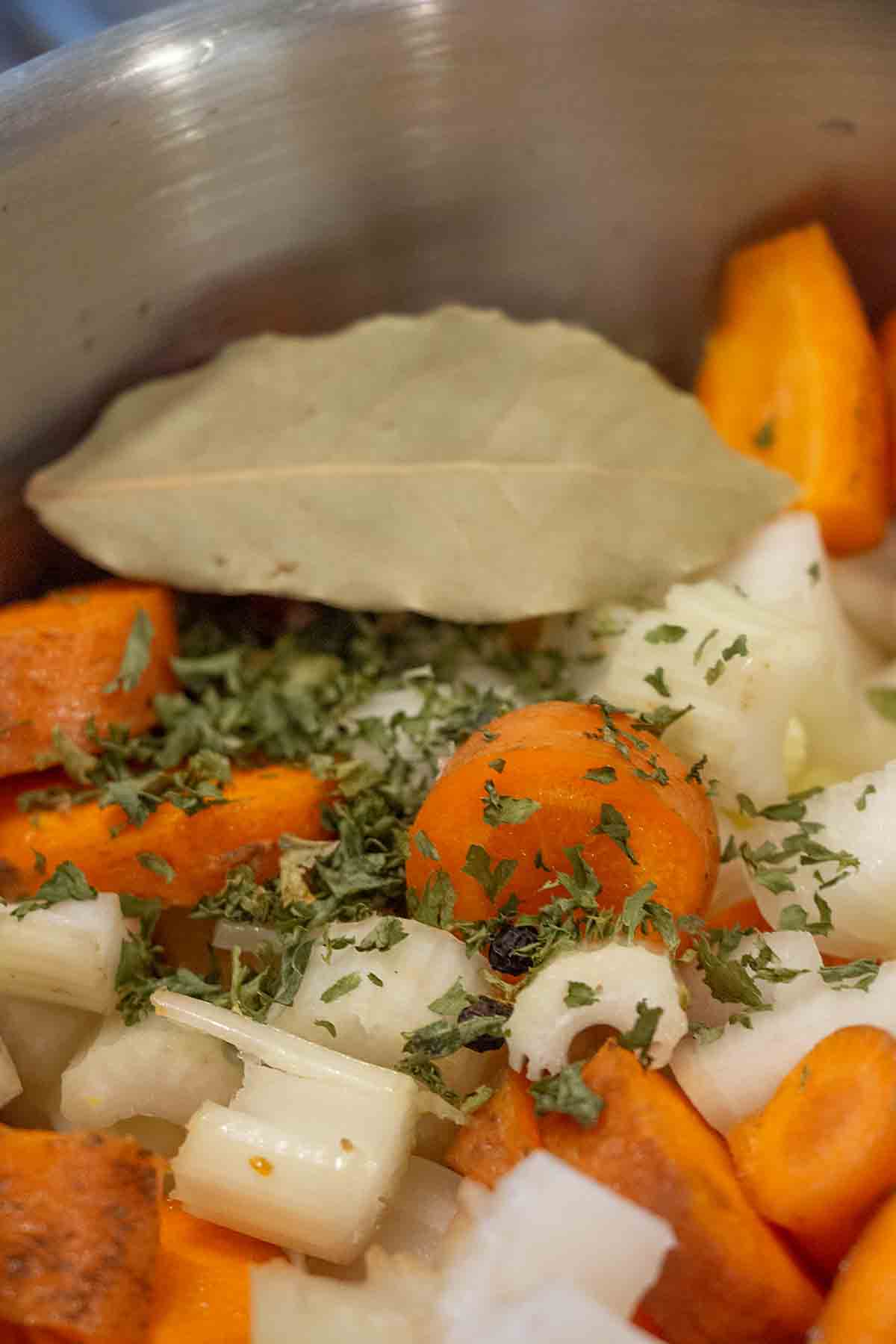
- Carrots, onions, celery, parsley. Adds flavor and nutrition. If I’m being really frugal I use things that are often discarded like the carrot ends, parsley stems, celery leaves and the green part of leeks or scallions.
- Bay leaves, peppercorns, optionally additional herbs. Adds flavor.
- Salt. Adds flavor.
- Water.
Special Tools
- You’ll need a stock pot or slow cooker large enough to hold the ingredients.

Step by Step Directions
Save scraps from a roasted chicken (bones, extra skin, etc). (If you aren’t roasting a chicken you can use other chicken scraps, ideally roasted). Remove any large pieces of remaining meat from the carcass for other uses and add the carcass to the scrap collection. 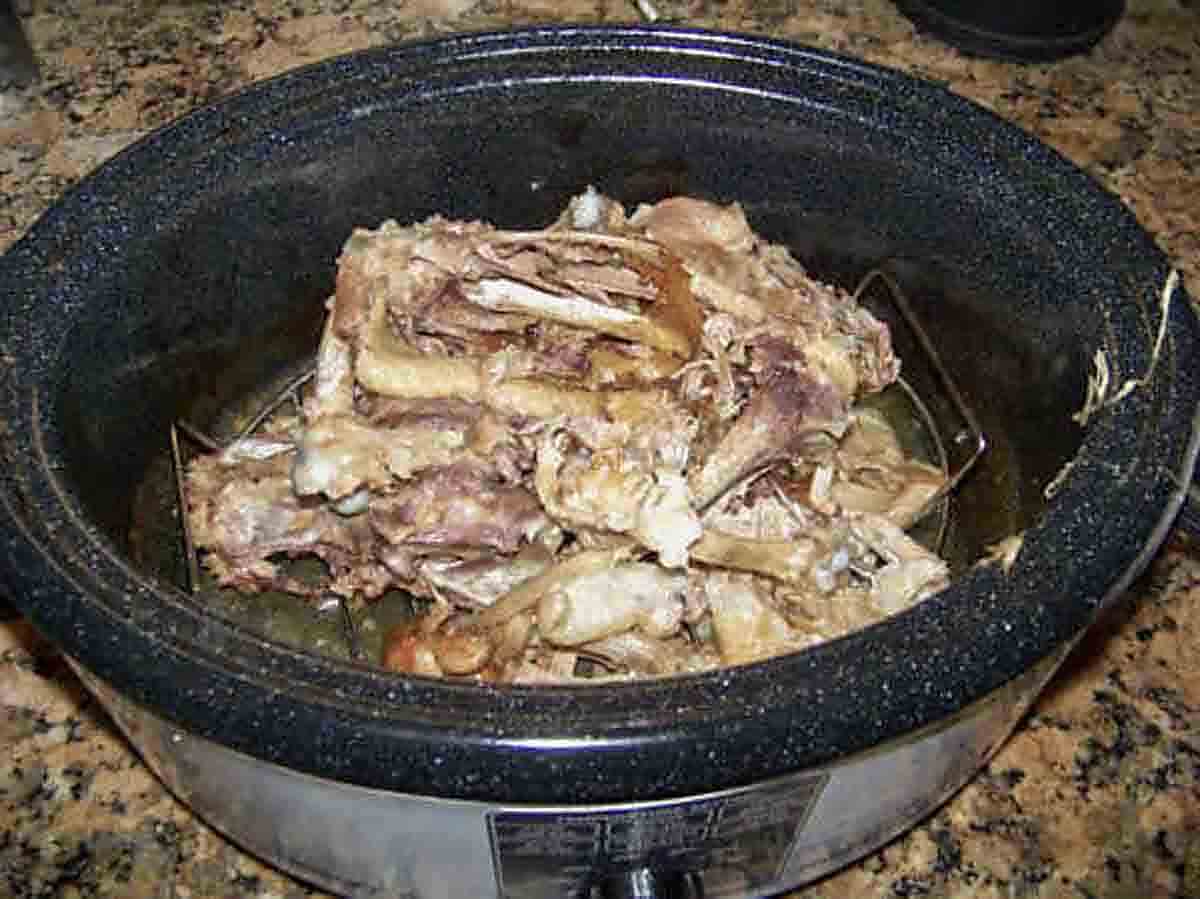 Deglaze the roasting pan for the flavorful juices. I pour boiling water into the pan, then scrape gently to dissolve the crisp remains for inclusion in my broth
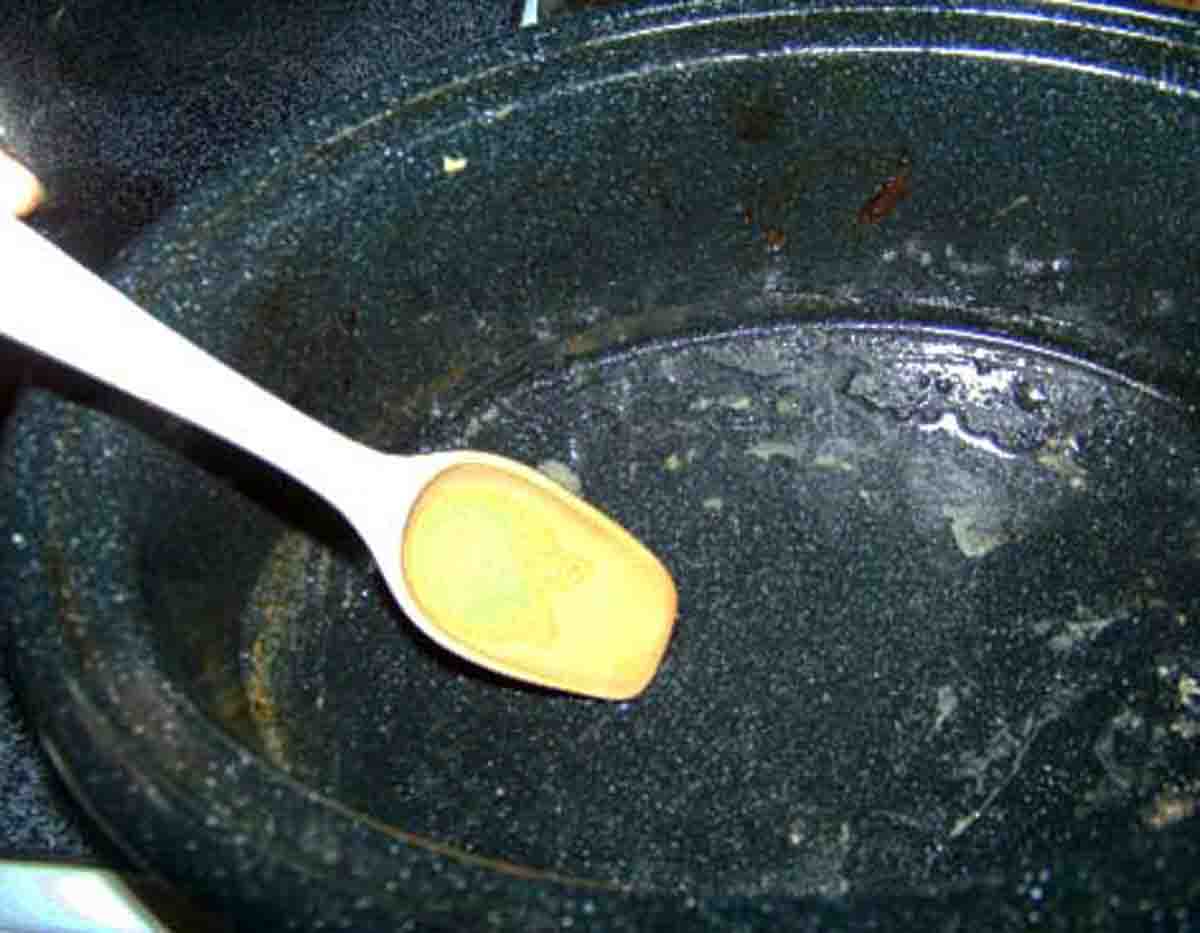
Combine this and other ingredients in a stock pot or slow cooker. Bring to a boil, then lower to a simmer.
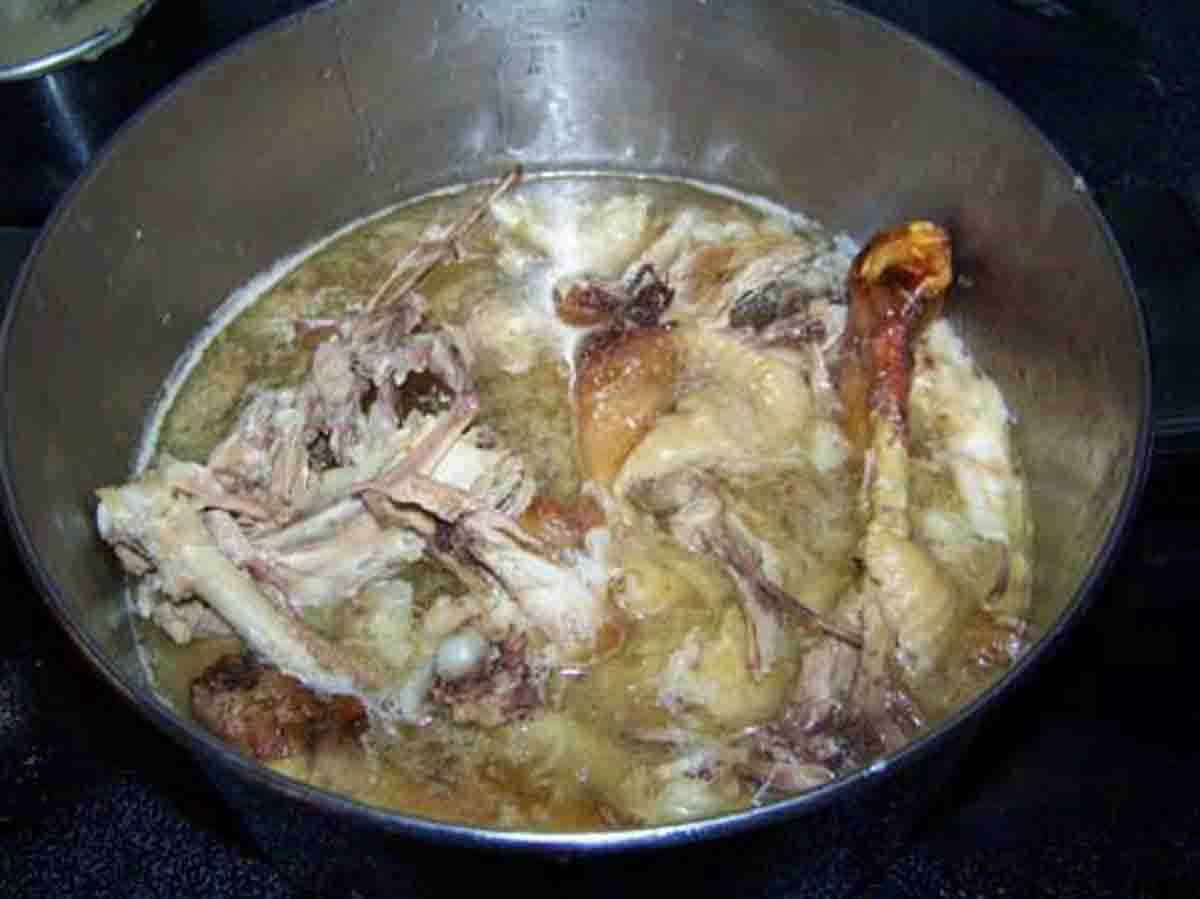
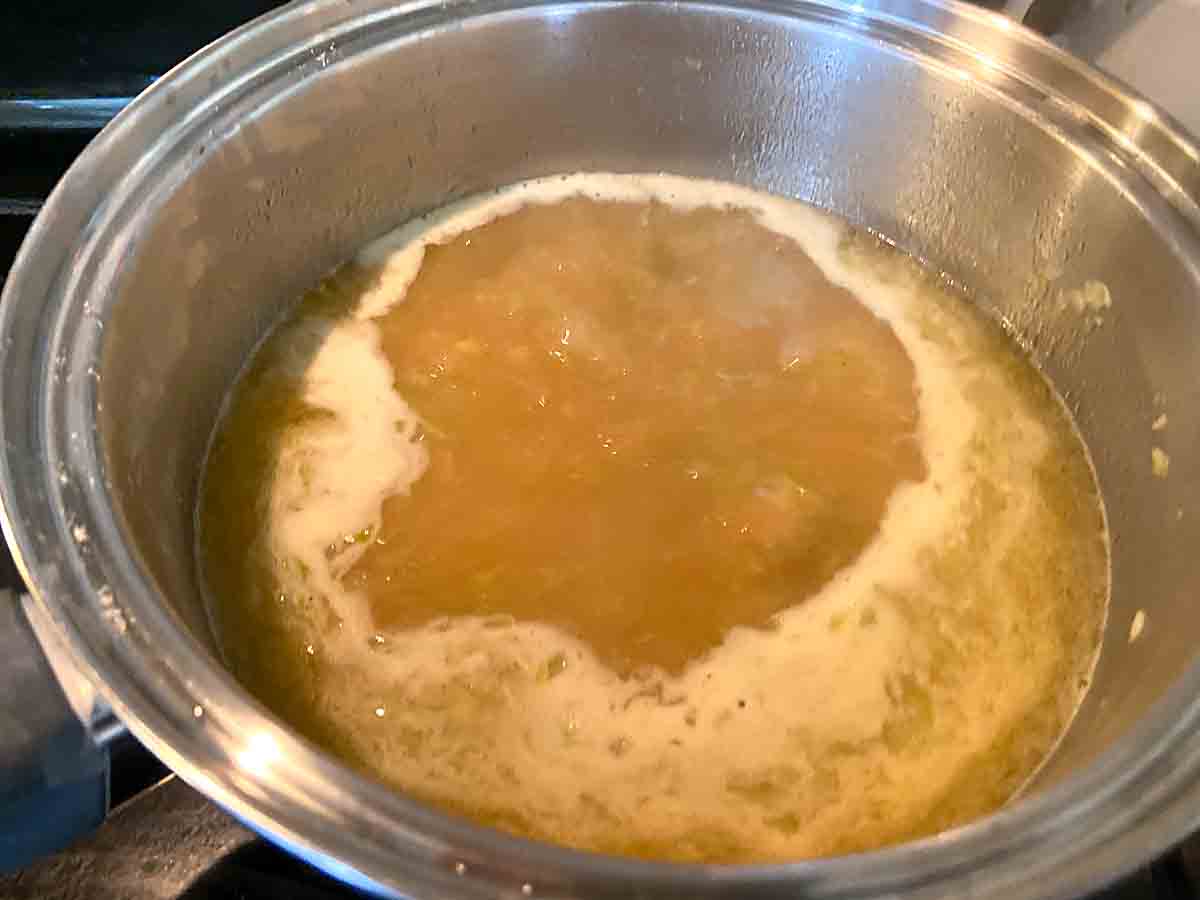
Simmer for up to 24 hours, but at least 12 hours. If scum forms on top, spoon this off as it cooks. Check periodically and add more water if needed.
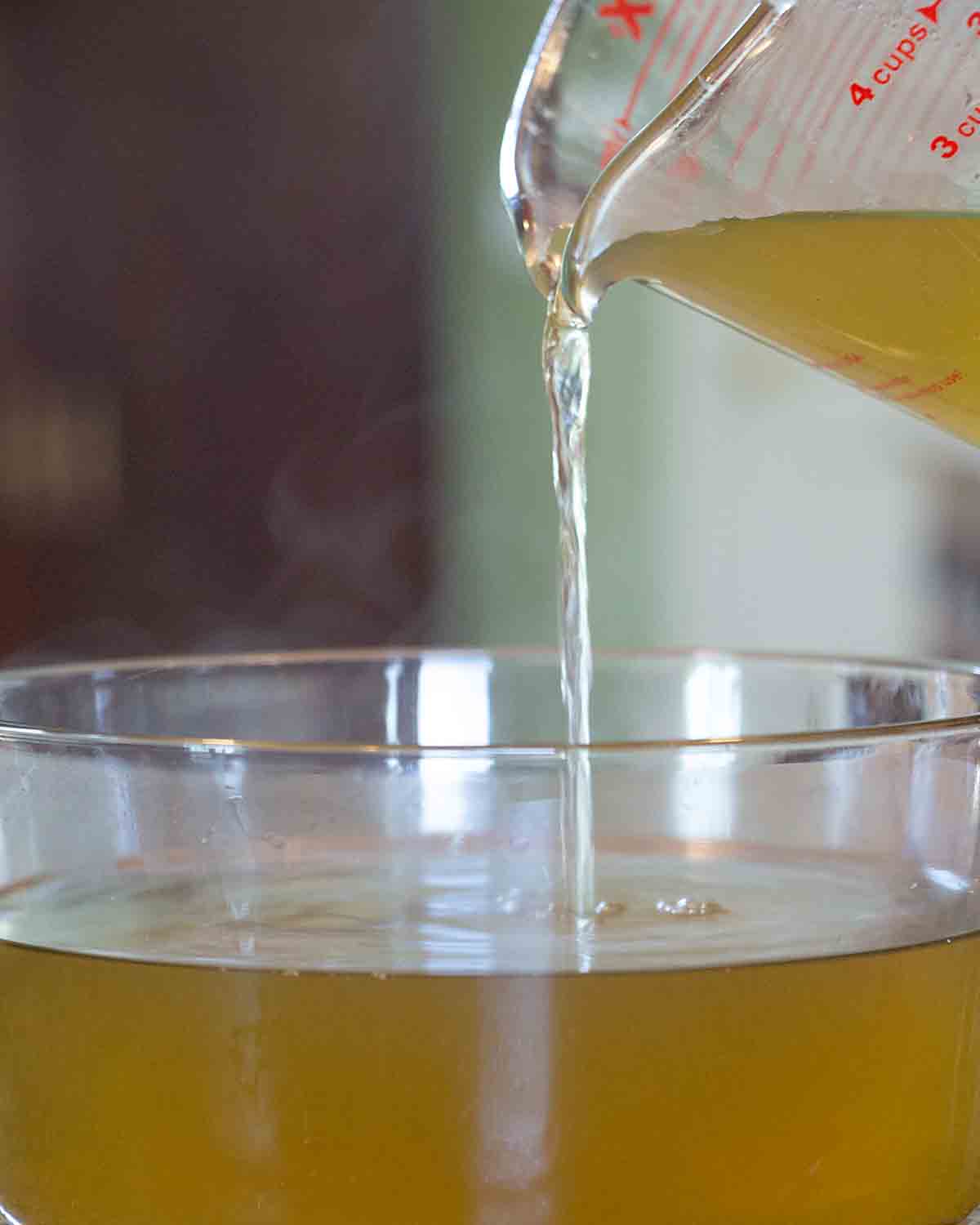
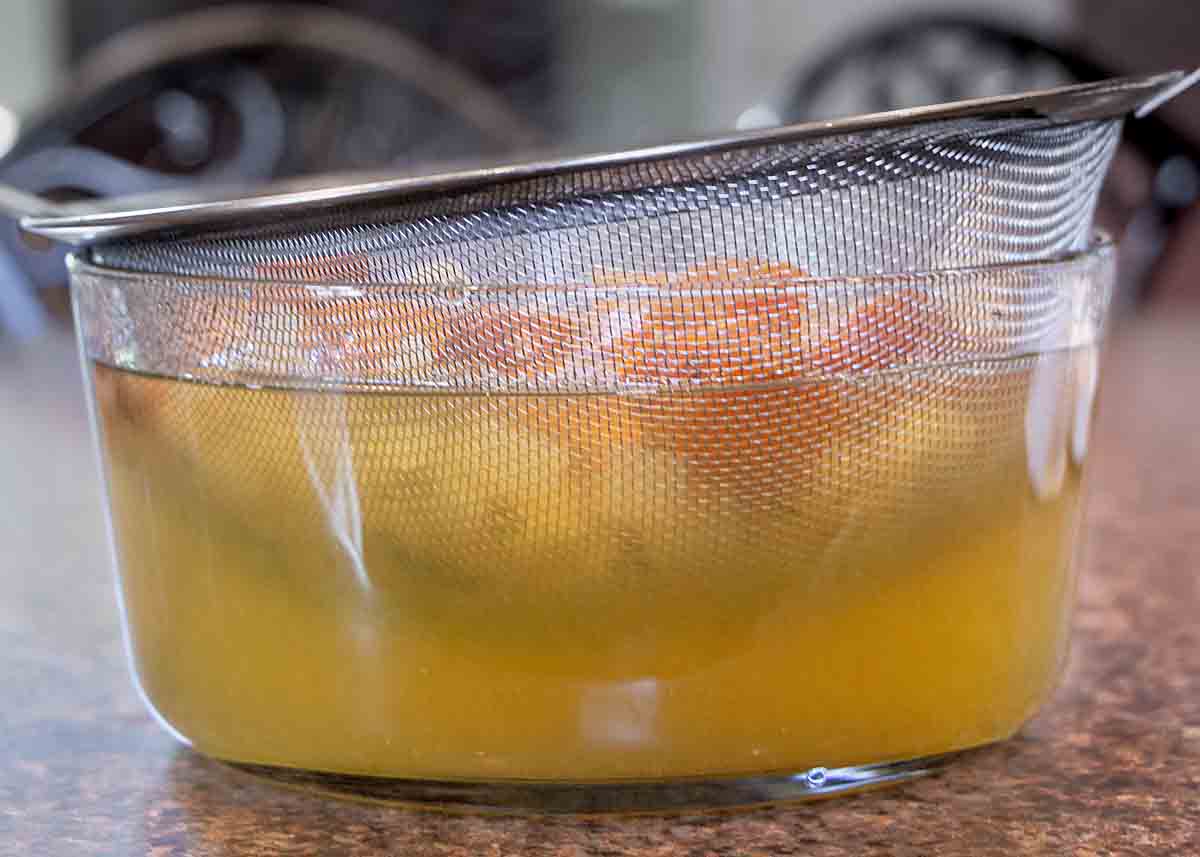
Near the end of the cooking time, taste the broth to see if it is strong enough. Continue cooking to reduce if it isn’t. When done, remove large vegetable pieces and bones with skimmer, then strain the broth. Add more salt if needed.
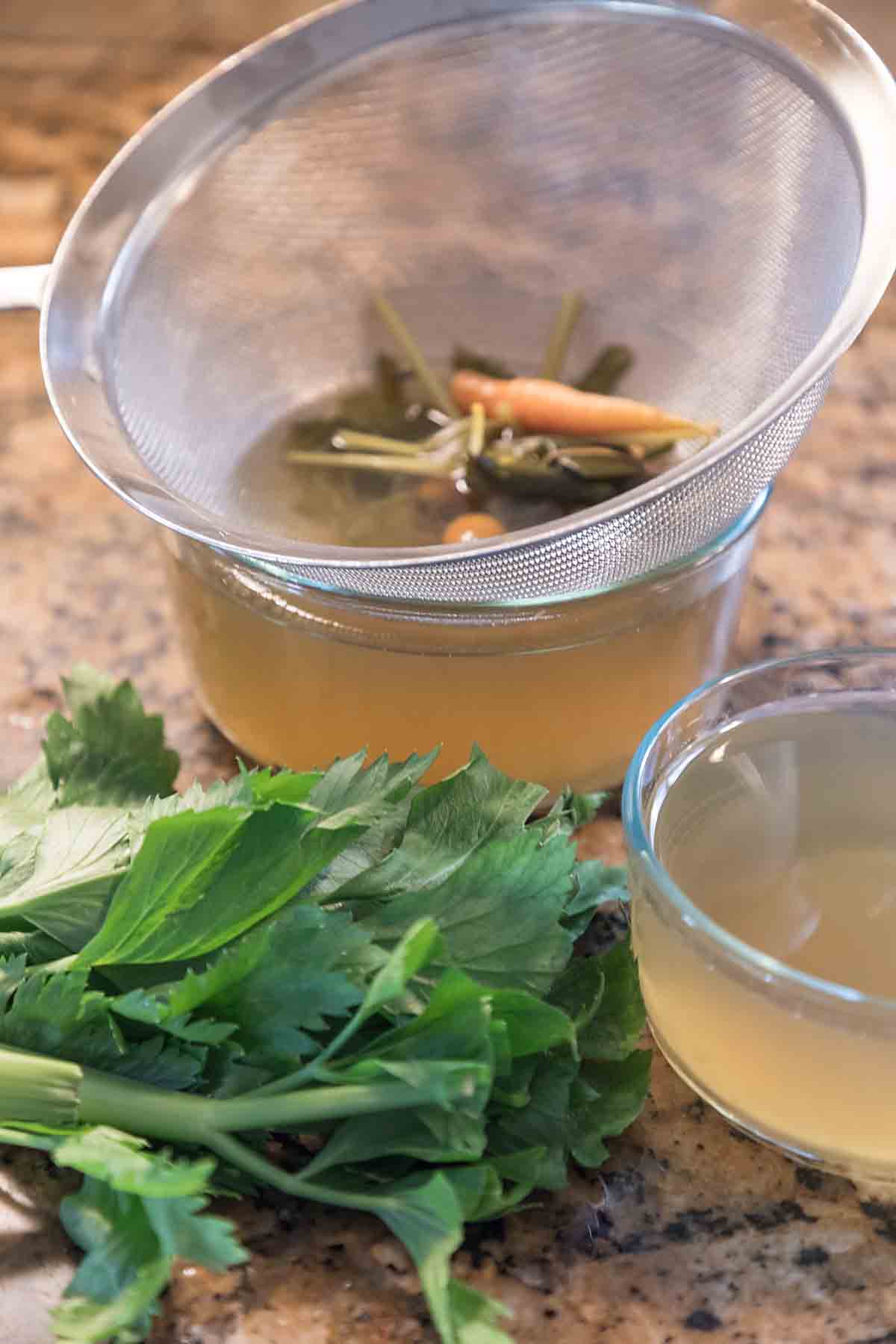
Refrigerate the broth to cool, then remove the fat which will solidify on top. The fat can be saved for other uses or discarded.
Broth can be heated and served by itself or used in soup or other recipes.
How to Serve
Bone broth is delicious and can be served, warmed, on it’s own.
I actually use most of mine in soups (and occasionally other recipes). Some of my favorite soups using chicken broth include: Egg Lemon Soup with Spinach, “Yes, We Can” Sage Roasted Chicken Soup and Cream of Spinach Soup with Potatoes.
Or check out a complete list of my soups.

Leftovers
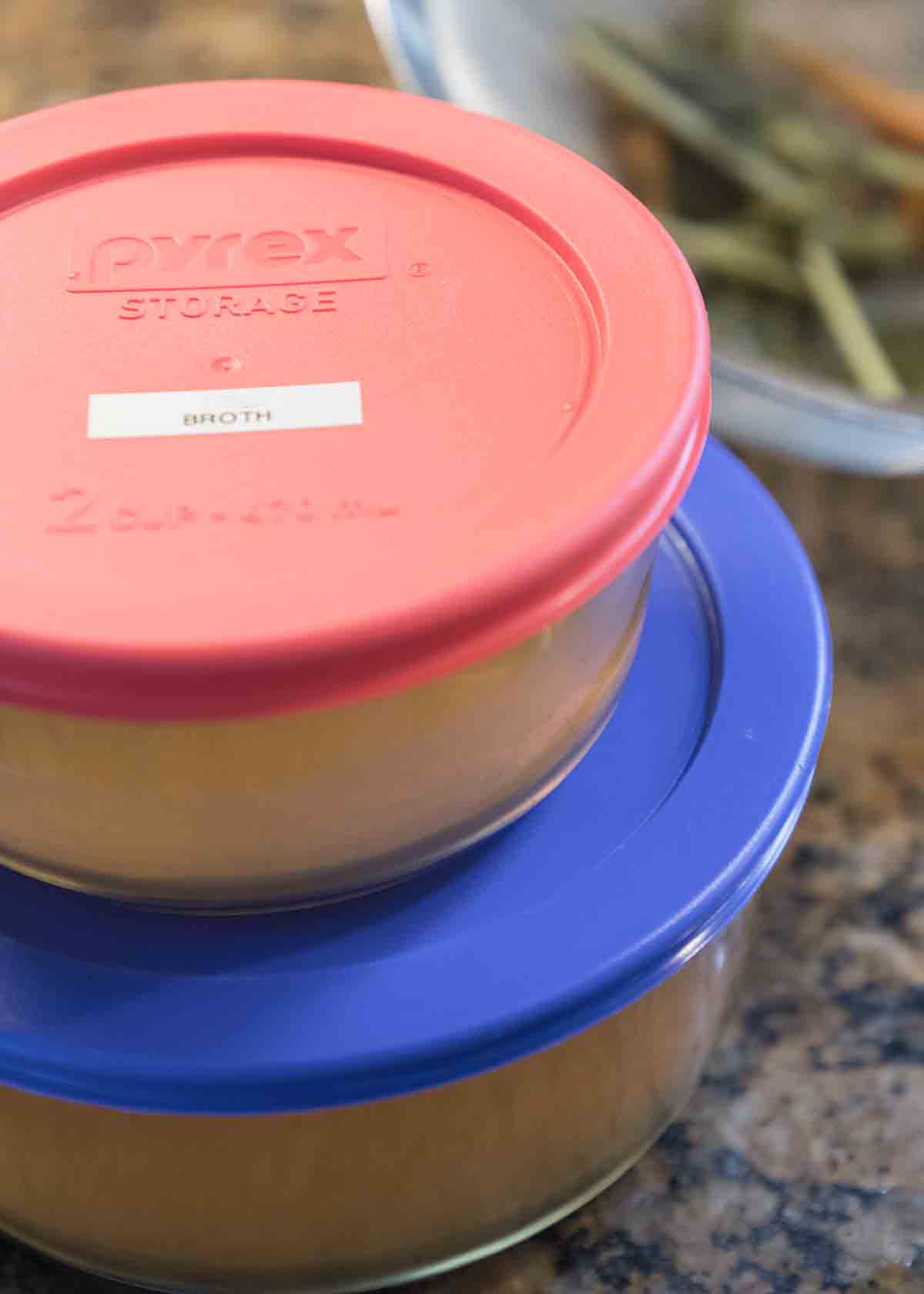
Bone broth will last for 3-4 days in the refrigerator. For longer storage it can be frozen or pressure canned.
I like to freeze the chicken fat removed and use it later for my grandmother’s Egg Noodles in Chicken Broth which uses a very rich stock.
Tips & FAQs
What if I don’t have enough time (or not enough bones) to make this? This happens to me regularly and the answer is simple! Your scraps can be frozen until you have enough time (or bones) to proceed. But let me give you one more tip here—even if you are freezing, don’t skip deglazing your chicken roasting pan, since the browned bits have so much flavor. I simply pour the deglazing liquid into a large pyrex container where I also store the bones.
While I often make chicken broth the same day, beef bone broth (made similarly) is almost always the accumulation of many prior recipe scraps. This means I always keep a big container for beef bones in my freezer. I add to it regularly, then when I’m spending a day in the kitchen, I’ll pull them out for stock.
Why do I see so much variation in cooking times? I saw cooking times range from less than 6 hours to as many as 48 hours, so I decided to see if I could find any studies on this. This research from Taiwan concluded that cooking times greater than 8 hours resulted in higher levels of minerals in the final broth, though all levels were low—less than 5% of the daily recommendation.
Looking more closely at their data, however, showed that extraction of certain minerals (i.e. calcium and Magnesium) increased substantially when cooking was extended from 8 to 12 hours, the upper range of their testing. So longer may indeed be better (though too long can make the vegetables bitter). I tend to shoot for around 24 hours.
The study also confirmed that the reduced ph (from the vinegar) contributed significantly to the mineral extraction.
Can I cook this all night? Although at a recent Weston A Price meeting, I heard people say they’d leave a simmering pot on the stove all night, this is not something I’d do. I just can’t shake the picture of the cat dragging a flammable towel onto the burner and burning the house down (yes, I’m neurotic). I usually move the pot to the refrigerator overnight and re-start first thing the next morning.
Others will use a slow cooker which makes sense, as long as you leave it on low and have enough liquid—which shouldn’t be a problem making broth! If you want to do this here are some safety tips from theKitchn. And finallly, the Kitchen Appliance HQ suggests that you use a slow cooker that is less than 10 years old and limit the time to 24 hours.
Can I use an instant pot? While many people do use an instant pot because it is faster, others report poorer results like less gelatin. There would be some logic to this, since extended high heat can break down gelatin. Since the time spent simmering in a pot is completely hands off, I personally don’t find a long cook time a problem. I simply get it started then go about my day.
Do I need to use roasted bones? If you use bones that aren’t roasted, you’ll get a solid broth that still has many of the same benefits–but the flavor won’t be as good. Roasting causes the Maillard reaction, the same type of flavor boost you get from browning a steak. So roast if you can, or use bones that have already been roasted, like with a roasted chicken.
Every year I buy one turkey on sale at Thanksgiving, thaw it just slightly until I can work with it, then cut off the legs, thighs and breast for future use. Then the carcass and wings are used for stock. Prior to boiling, I season them and roast in a very hot even for about 30 minutes until brown and fragrant. Then I deglaze the pan and proceed with making broth.

Favorite Chicken Recipes
- Adobo Chicken Wings from Karen’s Kitchen Stories
- Air Fryer Chicken Patties from Cheese Curd In Paradise
- Chicken an Bulgar Pilaf from Pandemonium Noshery
- Chicken Stir Fry Lettuce Wraps from Hezzi-D’s Books and Cooks
- Easy Baked Bruschetta Chicken from Blogghetti
- Easy Chicken Stroganoff from A Kitchen Hoor’s Adventures
- French Onion Chicken in the Pressure Cooker from That Recipe
- Honey BBQ Chicken Legs from Jen Around the World
- Organic Chicken Bone Broth from Art of Natural Living
- Southern Fried Chicken from Palatable Pastime
We share Recipes From Our Dinner Table! Join our group and share your recipes, too! While you’re at it, join our Pinterest board, too!
Chicken Bone Broth

Ingredients
- Scraps (bones, skin, wing tips, deglazed pan juices etc) from 1 large roasted chicken
- 2 Tbsp apple cider vinegar
- 1/2 cup chopped carrots (or carrot ends or carrots too small for other recipes)
- 1/2 cup chopped scallions, leeks or onion (or the green ends that are usually discarded)
- 1/2 cup coarsely chopped celery (or celery leaves)
- 1 bunch parsley (or parsley stems)
- 1 bunch other herbs, like thyme (optional)
- 1-2 bay leaves
- 6 peppercorns
- ½ teaspoon salt or to taste
- 2-3 quarts water or enough to cover everything well
Instructions
- Save scraps from a roasted chicken like bones, extra skin, etc. (or other chicken scraps). Remove any large pieces of remaining meat from the carcass for other uses and add the carcass to the scrap collection. Deglaze the roasting pan for the flavorful juices. I pour boiling water into the pan, then scrape gently to dissolve the crisp remains for inclusion in my broth
- Combine this and other ingredients in a stock pot or slow cooker. Bring to a boil, then lower to a simmer.
- Simmer for up to 24 hours, but at least 12 hours. If scum forms on top, spoon this off as it cooks. Check periodically and add more water if needed.
- Near the end of the cooking time, taste the broth to see if it is strong enough. Continue cooking to reduce if it isn't. When done, remove large vegetable pieces and bones with skimmer, then strain the broth. Add more salt if needed.
- Refrigerate the broth to cool, then remove the fat which will solidify on top. The fat can be saved for other uses or discarded. Broth can be heated and served by itself or used in soup or other recipes.
Originally published 1/7/2011
This is fantastic to keep on hand for soup season!
I am saving this to use in making Pho when the cooler temps get there!
I don’t think I’ve ever made bone broth. Definitely need to try!
I’ve made this myself. Nothing like it!
Pingback: “Yes, We Can” Sage Roasted Chicken Soup - Art of Natural Living
Pingback: How to Roast a Chicken (the Lazy Way) | Art of Natural Living
Pingback: Ten Thanksgiving Leftover Ideas (and an Announcement) «
Love it! I use a similar technique but never thought to deglaze the pan. Thx for sharing!
If I get a lot of nice browned bits my only dilemma is whether to make gravy instead using the degalzed juices in the broth–of course the bones still work for broth even if gravy is made. I am looking forward to trying your veggie scrap broth!
Pingback: Channeling Grandma: Egg Noodles in Chicken Broth « Art of Natural Living